
Passion for perfection
Oral Care Integrated with Overall Biological Health
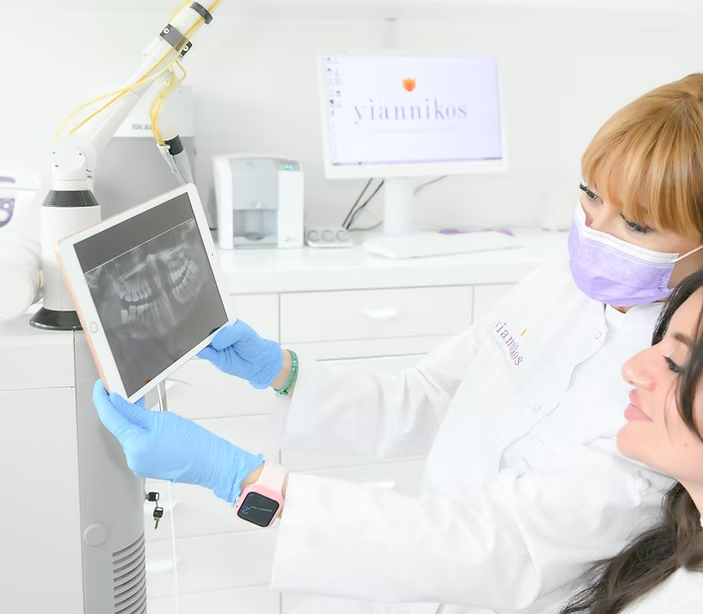
It is important to note that biological dentistry is not a recognised dental specialty, but a clinical philosophy that guides treatment decisions and patient care. It reflects a comprehensive approach in which each patient is considered within the context of their overall health and individual biological response.
At Yiannikos Centre for Holistic Dentistry, this philosophy is applied directly and consistently. We address both oral and systemic health — focusing on overall well-being through the use of carefully selected, biocompatible materials, with a clear emphasis on safety and biological compatibility.
Biologically Guided Dentistry — Systemic Health First.
It is important to note that biological dentistry is not a recognised dental specialty, but a clinical philosophy that guides treatment decisions and patient care. It reflects an integrated approach in which each patient is assessed within the context of their overall health and individual biological response.
At Yiannikos Centre for Holistic Dentistry, this philosophy is applied directly and consistently. We address both oral and systemic health — focusing on long-term well-being through the use of carefully selected biocompatible materials, with a clear emphasis on safety and biological compatibility.
Call or Book online Today
35+
Years of Dental Perfection
30K
Trusted Patients
140K
Fillings
Our Clinical Process — Structured, Transparent, Predictable
At Yiannikos Centre for Holistic Dentistry, every treatment follows a structured and transparent clinical process — designed to ensure clarity at every stage. Advanced technology and controlled protocols work together to deliver outcomes that are safe, effective, and consistently predictable.

Holistic Dentistry
A clinically guided approach using biocompatible materials and minimally invasive protocols to support long-term oral and systemic health

Cosmetic Dentistry
A personalised, precision-driven approach to improving dental aesthetics while preserving natural tooth structure and long-term health.
Pediatric Holistic Dentistry
A gentle, minimally invasive approach focused on preserving natural teeth and supporting healthy development
Teeth Whitening
A controlled, professional approach to improving tooth shade while preserving enamel integrity
Smile Refinement
A precise, minimally invasive approach to enhancing aesthetics while preserving natural tooth structure
Laser Dentistry
Minimally invasive treatment using precision-guided energy to support healing and tissue preservation
Our reviews
Posted on Google
 Shaul Czerniewicz Benjamin1 days ago
Trustindex verifies that the original source of the review is Google.
Dr Yiannikos and her staff are the best dentists I ever came across. The level of care is unmatched and their professionalism is outstanding. They offer cutting edge treatments to prevent exposure to harmful chemicals and this is another great reason to seek their help and advice. Dr Yiannikos has a holistic approach to health that encompasses other fields of healthcare, which is a game changer to those placing an emphasis on their well being as a whole. Congratulations!Posted on Google Chase Straight1 days agoThis is the best dentist clinic in Limassol, and the best one I’ve ever been to in any country that I’ve lived. The doctor and staff are kind, nice to talk to, and they have advanced techniques, equipment and world class dentistry care. Got a wisdom tooth pulled, friends said I’d be out suffering in recovery for days - but they had a special treatment, and I was talking and back at work the same day. No pain at all.Posted on Google
 Maria2 days ago
Trustindex verifies that the original source of the review is Google.
Posted on GoogleMaria2 days agoPosted on Google Demos Paroutis22 days agoPosted on Google
 Anthi25 days agoI suffered from reoccurring post natal periodontitis and had to have painful treatment every couple years. Since being treated by Anna Maria, I have noticed a real difference for the first time 😊Posted on Google
 Georgia Taliadorou45 days agoPosted on Google
 Sasha Alex95 days agoYou notice the details the moment you walk in. The team is polite and organised without feeling corporate about it — there’s a warmth there that’s actually quite rare. The treatment itself was precise and modern, but what stayed with me was how attentive everyone was throughout. A clinic that clearly takes its work seriously.Posted on Google
 Ζησης Χριστοδούλου101 days agoPosted on GoogleΖησης Χριστοδούλου101 days agoVerified by TrustindexTrustindex verified badge is the Universal Symbol of Trust. Only the greatest companies can get the verified badge who has a review score above 4.5, based on customer reviews over the past 12 months. Read more

Your Smile, Precisely Planned.
A smile transformation at Yiannikos Centre for Holistic Dentistry begins long before any procedure. Every outcome is guided by advanced digital planning, refined treatment protocols, and a clinical standard that leaves nothing to chance.