
Passion for perfection

What Is a Dental Implant?
A dental implant is a surgical component placed within the jawbone, designed to replicate the function of a natural tooth root and provide stable, long-term support for prosthetic restorations.
At Yiannikos Centre for Holistic Dentistry, we use zirconia implants as our material of choice — for reasons that are both clinical and biological:
- Zirconia is a metal-free, biocompatible material with no risk of corrosion or ion release
- It offers high structural strength and long-term dimensional stability
- It supports a favourable soft-tissue response and predictable osseointegration
The Implant Treatment Process
The ceramic implant process is carried out in three defined stages: surgical placement of the implant, a structured healing phase, and placement of the final restoration.
Following implant placement, an adequate healing period is observed before the restoration is fitted — allowing for stable osseointegration prior to loading.
At Yiannikos Centre for Holistic Dentistry, we incorporate autologous growth factors (PRF) to support tissue healing and optimise biological integration at the implant site.
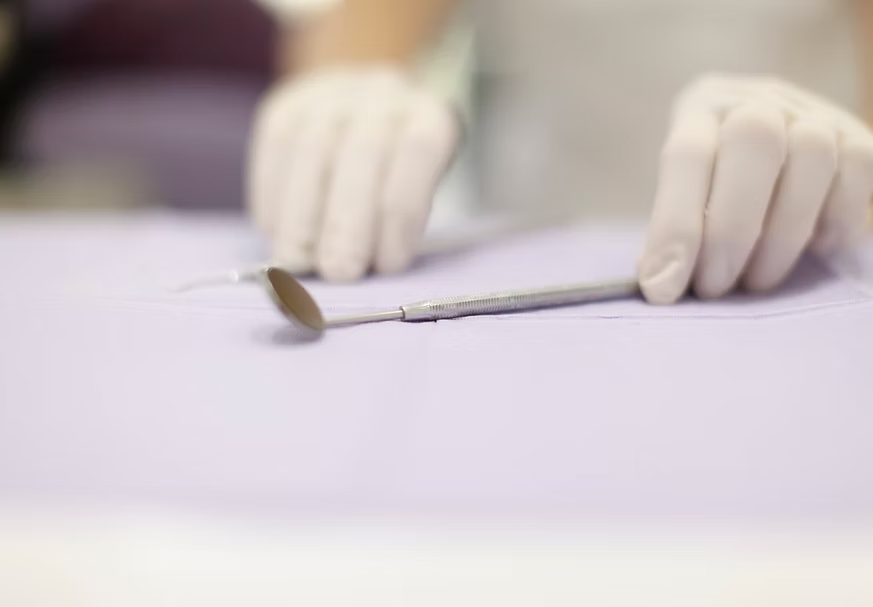
Additional Clinical Advantages of Zirconia Implants.
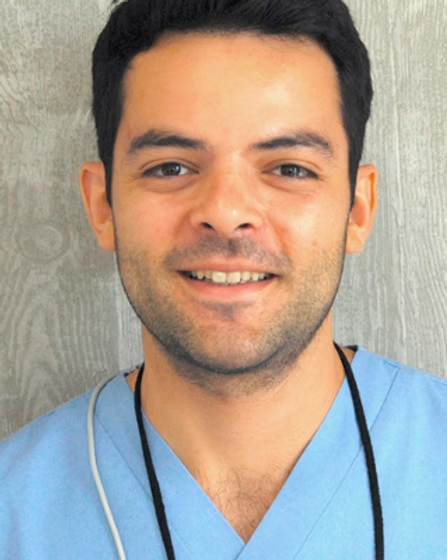
The implantologist of our Center, Dr Christos Constantinides, completed advanced scientific training in implantology at Columbia University. He provides clear, structured explanations for each case — ensuring that you fully understand your treatment options and clinical needs, with safety and long-term health as the guiding principles.
The entire clinical team at Yiannikos Centre for Holistic Dentistry engages in continuous professional training, maintaining consistent standards across all treatments and disciplines.
If you are considering whether a dental implant is the right option for you, our team will provide clear guidance on biocompatible implant solutions and personalised treatment planning.
Material selection is based on biological compatibility — chosen to avoid adverse toxic or immunological responses. We use zirconia implants that combine precision, strength, and reliable clinical outcomes, offering a solution that is both biologically sound and built for long-term health.

Why Choose Yiannikos Centre for Holistic Dentistry
The implantologist at Yiannikos Centre for Holistic Dentistry, Dr. Christos Constantinides, completed advanced scientific training in implantology at Columbia University. He provides clear, structured explanations for each individual case — ensuring you fully understand your specific clinical needs and treatment options, guided at every step by precision and patient safety.
Every member of our clinical team engages in continuous professional training, maintaining consistent standards across all treatments and disciplines — in full alignment with the clinical direction set by Dr. Constantinides.
If you are considering whether a dental implant is the right solution for restoring your function and aesthetics, our team will provide accurate, personalised guidance on biocompatible implant options and treatment planning.
Material selection is based on biological compatibility — chosen to avoid adverse toxic or immunological responses. We use zirconia implants that combine precision, strength, and reliable clinical outcomes, offering a solution that is both biologically sound and built for your long-term health.
Frequently asked questions
What are dental implants?
Dental implants are biocompatible fixtures surgically placed into the jawbone to replace missing teeth. They integrate with bone, providing a stable foundation for functional and aesthetic restorations.
Who is a suitable candidate for dental implants?
Most patients with one or more missing teeth are eligible following clinical evaluation.
Contraindications include advanced periodontal disease, insufficient bone volume, and uncontrolled systemic conditions such as diabetes or osteoporosis.
What are the advantages of dental implants?
Dental implants provide long-term stability and durability compared to alternative tooth replacement options.
They replicate the appearance and function of natural teeth while supporting overall oral health and structural integrity.
What are the limitations of dental implants?
The primary limitation is the initial financial investment compared to alternative tooth replacement options.
However, long-term performance and durability often justify the overall cost.
How much do dental implants cost?
The cost of dental implants varies based on the number of implants, materials selected, and clinical complexity. Investment for a single implant is determined following a precise clinical assessment, ensuring a treatment plan tailored to your individual needs.
Does insurance cover the cost of dental implants?
Coverage depends on your individual insurance plan and specific policy terms. Verification with your provider is required to determine eligibility and reimbursement level.
What is a zirconium dental implant?
A zirconium dental implant is a metal-free, biocompatible fixture placed into the jawbone to replicate the function of a natural tooth root. It provides stable support for restorations while ensuring high biological compatibility, mechanical strength, and reduced risk of allergic reactions.
What is the process of a zirconium dental implant?
The procedure includes surgical placement, a healing phase, and final restoration. Duration ranges from 30 minutes to 4 hours, depending on the number of implants and case complexity.
Clinical steps include removal of the damaged tooth if required, controlled gingival access, and precise implant placement into the jawbone. Following osseointegration and tissue healing over several months, an abutment is placed and the final restoration is secured.
What should you expect after implant surgery?
Post-operative discomfort is typically minimal, with possible swelling, minor bleeding, and localized soreness. Successful osseointegration ensures stable, functional replacement of the natural tooth. Strict oral hygiene and regular professional follow-up are essential to maintain peri-implant health and long-term results.
What is the success rate of dental implants?
Dental implants demonstrate a high long-term success rate, typically exceeding 90% under proper clinical conditions.
How should dental implants be maintained?
Proper maintenance requires disciplined oral hygiene, including twice-daily brushing and daily flossing. Regular professional examinations are essential, along with avoidance of excessive mechanical stress from hard foods.
What are the risks associated with dental implants?
The overall risk profile is low under proper clinical protocols. Potential complications include infection, peri-implant bone loss, and rare cases of implant failure.
What are the consequences of not replacing missing teeth?
Untreated tooth loss can lead to periodontal disease, caries in adjacent teeth, and progressive bone resorption. It may also result in occlusal imbalance and visible facial structural changes over time.