
Passion for perfection
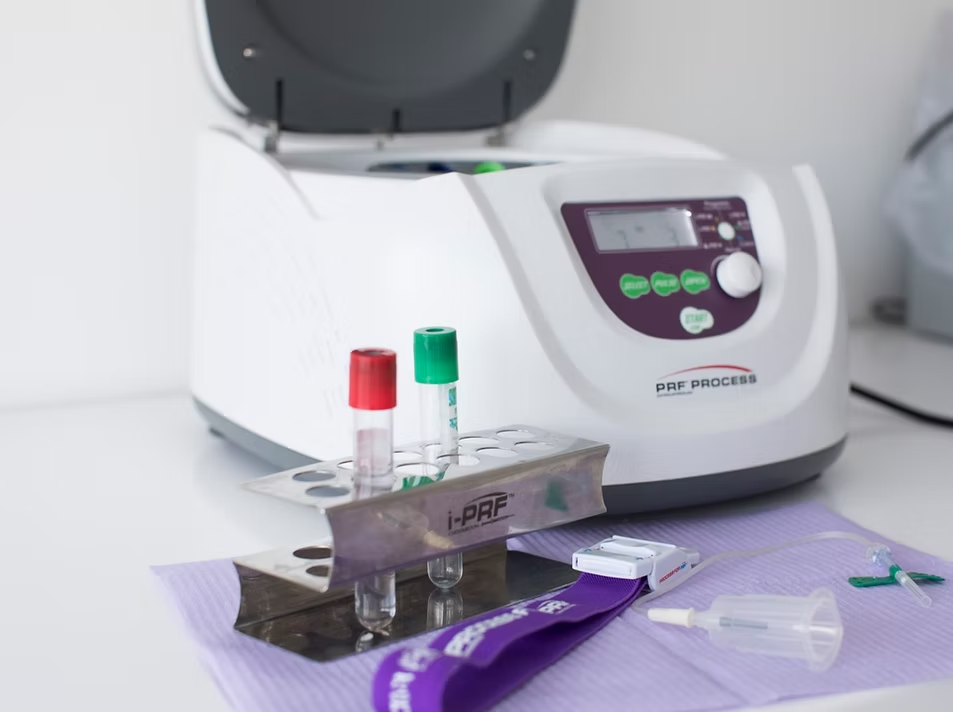
Platelet-Rich Fibrin (PRF) — Biological Support for Healing and Regeneration
PRF (platelet-rich fibrin) is used as a supportive therapy in procedures such as extractions, periodontal treatment, and selected aesthetic interventions. It is an autologous biomaterial derived from the patient’s blood, rich in growth factors that support tissue healing and regeneration.
This technique is integrated into our clinical protocols to enhance healing response and improve treatment conditions in a controlled and biologically aligned manner.
A simple, clinically effective approach
The PRF Process — Simple, Autologous, and Integrated
A small sample of blood — approximately 10 ml — is collected and processed through centrifugation to obtain platelet-rich fibrin (PRF). The PRF is then applied directly to the extraction site or soft tissues to support healing and tissue regeneration.
The entire process is completed within approximately 10 to 15 minutes and is performed as an integrated part of the overall clinical procedure — with no additional appointments required.
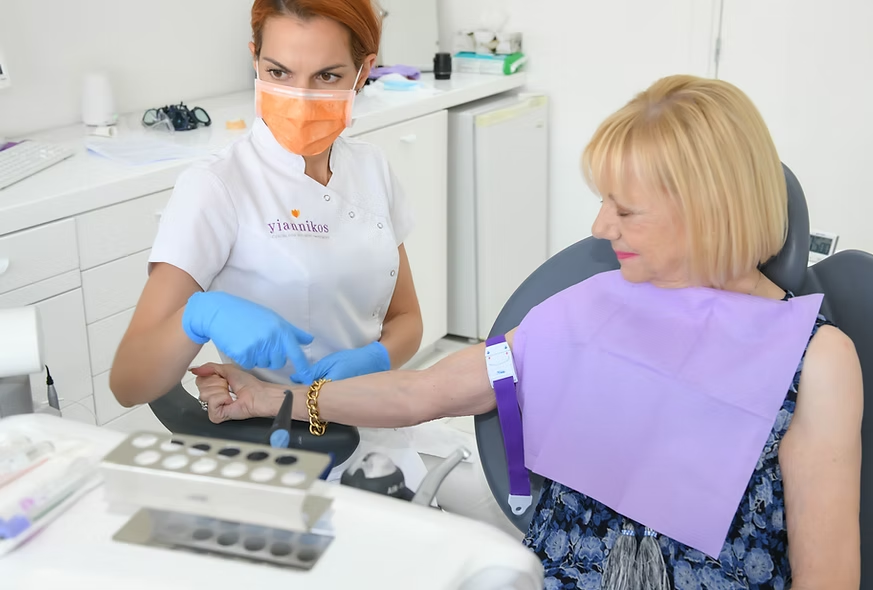
What Is PRF and How Is It Used?
Platelet-rich fibrin (PRF) is an autologous biomaterial derived from the patient’s own blood, containing a high concentration of platelets, leukocytes, and growth factors that support tissue healing and regeneration.
At Yiannikos Centre for Holistic Dentistry, PRF is integrated into our clinical protocols as a supportive therapy — applied across a range of procedures where an enhanced healing response is clinically beneficial. It supports the regeneration of both soft tissues and bone, and is particularly indicated in the following cases:
- Immediately following tooth extraction
- During dental implant placement
- In the management of periodontal conditions, including gingivitis and periodontitis
- In selected aesthetic procedures involving soft tissue and root exposure
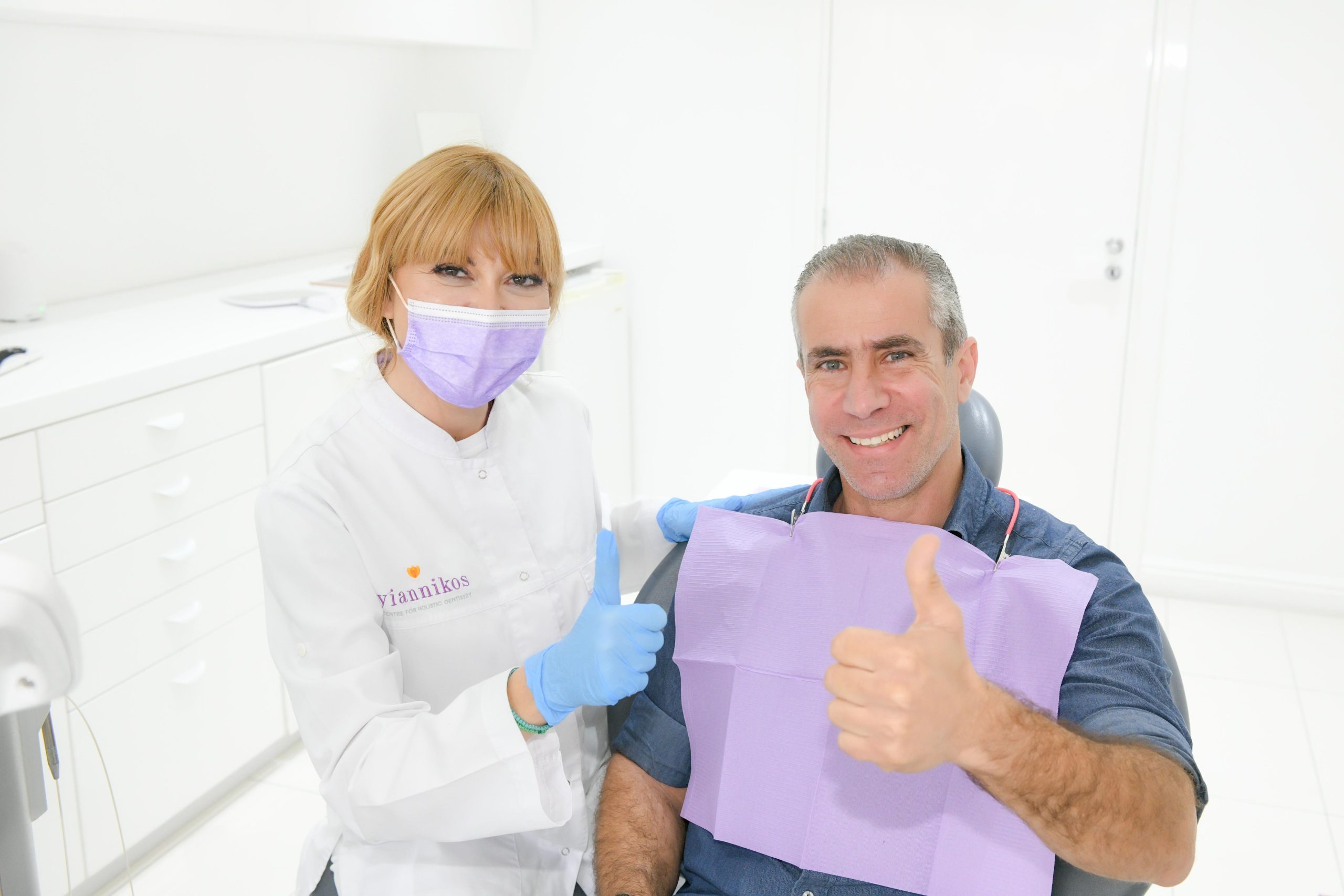
Indications for PRF Application
PRF — Clinical Indications and Patient Suitability
PRF may be considered as a supportive therapy in patients where enhanced healing conditions are desirable — particularly in individuals with systemic or local factors that may influence tissue repair.
Clinical indications may include:
- Patients with diabetes
- Smokers
- Patients with vitamin deficiencies
- Individuals with cardiovascular conditions
- Patients receiving antiplatelet or anticoagulant therapy — including aspirin
- Patients undergoing treatment for osteoporosis, including bisphosphonate therapy
- Patients with a history of head and neck radiotherapy
In these situations, healing response may be affected. PRF can be incorporated into the treatment plan to support tissue repair and recovery — always based on individual clinical assessment and the specific needs of each patient.
Clinical Benefits of PRF
- Supports improved control of bleeding at the treatment site
- May help reduce post-operative swelling
- Contributes to reduced discomfort during the healing phase
- Supports a more efficient and predictable healing response
- May reduce reliance on pharmacological intervention in selected cases
- Integrates seamlessly into minimally invasive, controlled treatment protocols
- Focused on long-term clinical value through optimised healing conditions
- As a fully autologous material, PRF is well tolerated and associated with a low risk of adverse reactions
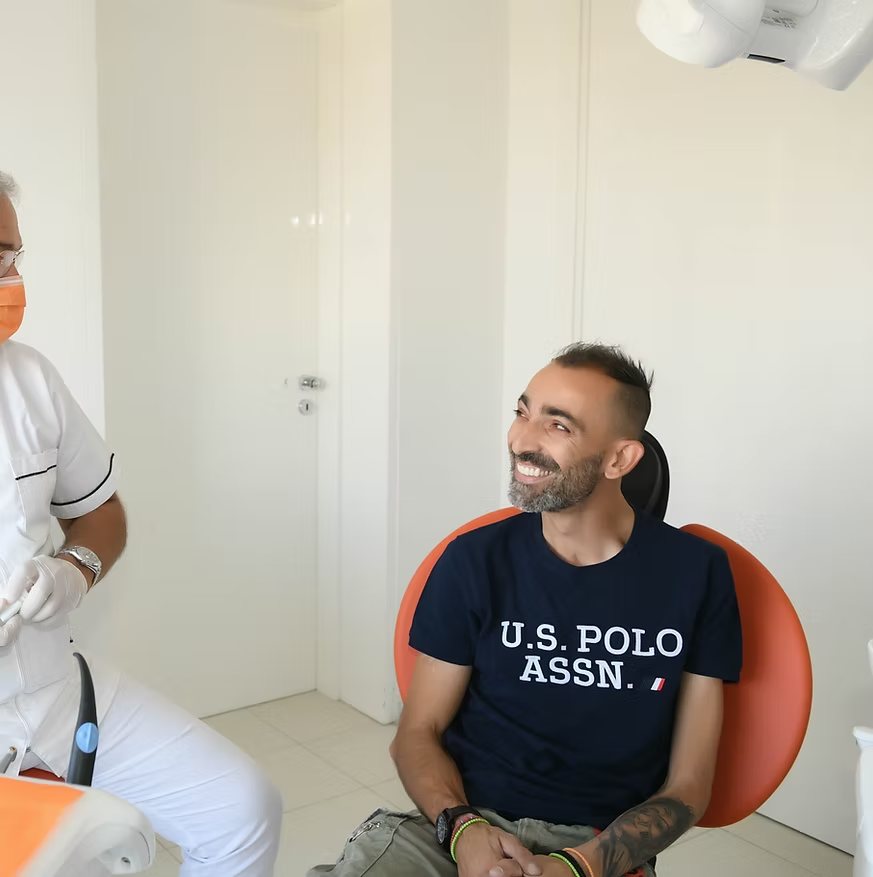
PRF at Yiannikos Centre for Holistic Dentistry
PRF is applied based on clinical indication and integrated into a structured, biologically guided treatment approach — always with a focus on safety, biological compatibility, and long-term outcomes.
Dr. Anna Maria Yiannikos and Eirini Fragkiadaki have both completed advanced training in PRF protocols, including clinical education with Joseph Choukroun — the originator of the technique.

Frequently asked questions
What is PRF?
PRF (platelet-rich fibrin) is an autologous biomaterial derived from the patient's blood. It contains concentrated platelets, fibrin matrix, and growth factors that support tissue regeneration. PRF promotes bone formation and soft tissue healing, accelerating recovery and enhancing clinical outcomes.
Why is PRF used in dental treatments?
PRF supports hemostasis, reduces post-operative swelling, and contributes to pain control. It lowers the risk of dry socket and helps preserve soft tissue and bone volume.
How is the PRF protocol performed?
The protocol involves controlled blood collection and centrifugation to produce a concentrated fibrin matrix. This autologous material is then applied to the surgical site to support healing using advanced, clinically validated techniques.
What is the clinical process of PRF application?
A small blood sample (approximately 10 ml) is collected from the patient.
It is centrifuged to separate and concentrate the fibrin and cellular components.
The resulting material is applied to the surgical site or within the tissues.
This provides a fully biocompatible method to support optimal healing and tissue regeneration.
Is the treatment covered by insurance?
Coverage depends on your individual insurance policy and provider conditions.
Why is PRF used in biological dentistry?
PRF enhances healing, reduces post-operative discomfort, and supports tissue regeneration following invasive procedures.
The protocol requires minimal additional time and significantly improves recovery quality and clinical comfort.
In which clinical situations is PRF applied in dentistry?
PRF is indicated in extractions, both surgical and non-surgical, to support healing and tissue stability.
It is also applied in implant procedures, periodontal therapy, and management of gingival recession.
What are the benefits of PRF?
PRF enhances healing capacity and improves clinical outcomes, particularly in patients with compromised regenerative potential.
It is especially beneficial for individuals with diabetes, smoking history, vitamin D deficiency, hypercholesterolemia, cardiovascular conditions, prior radiotherapy, or specific medications such as bisphosphonates or aspirin.