
Passion for perfection
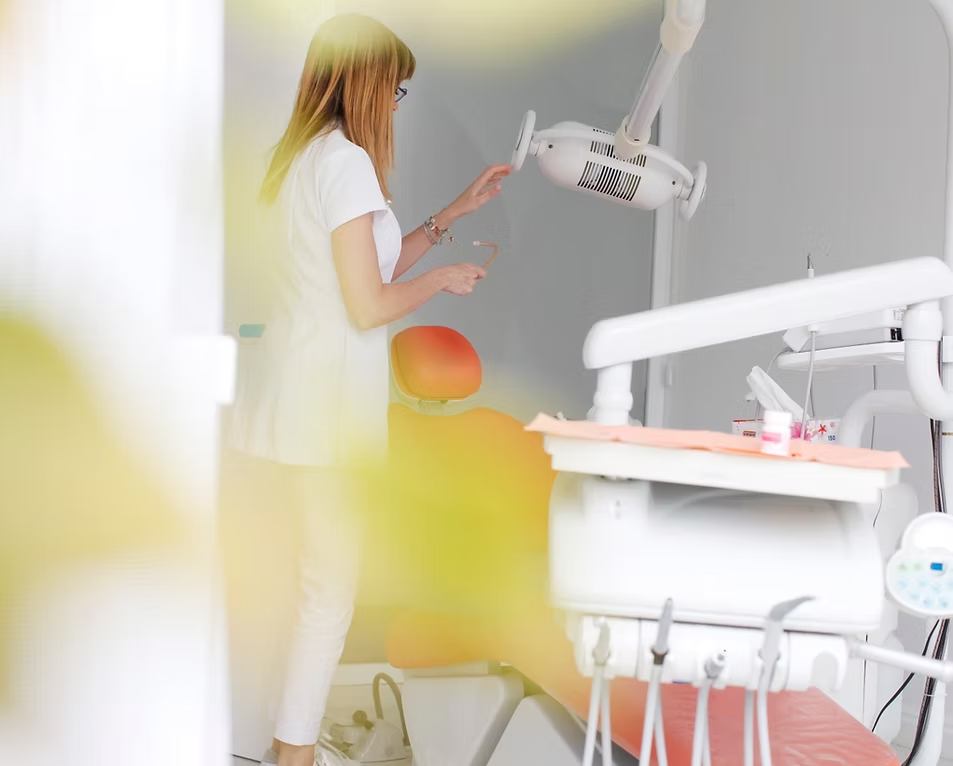
Amalgam Removal Under Controlled Conditions.
At Yiannikos Center for Holistic Dentistry, we follow the SMART protocol for the controlled and protective removal of amalgam fillings, ensuring a high level of safety and clinical precision throughout the process. This protocol is essential because amalgam contains mercury, which may release vapors during placement or removal procedures. Without appropriate isolation and protection, this can increase unnecessary exposure, which is why we implement strict, controlled measures to ensure a safe, consistently managed, and reassuring treatment experience.
Your health deserves a precise standard. That standard is SMART.
Why SMART Protocol?
SMART is a structured protocol established by the International Academy of Oral Medicine and Toxicology (IAOMT), defining a precise sequence of protective measures for the safe removal of amalgam fillings.
At Yiannikos Center for Holistic Dentistry, we implement SMART as a core clinical standard — not as an option, but as a commitment. Every step is executed with consistency and precision, because your safety during amalgam removal is not a matter of approximation.
SMART Protocol: Why Method and Control Define Safe Amalgam Removal.
Amalgam fillings consist of approximately 50% mercury — and removal, when indicated, requires careful consideration. Research confirms that mercury vapours can be released during the removal process, as well as during routine activities such as brushing, grinding, and chewing.
Mercury exposure is a recognised clinical concern — for patients and clinical staff alike. This is precisely why the procedure must be carried out under strictly controlled conditions, by professionals with specific training and experience in safe amalgam removal.
The procedure itself is calm, efficient, and guided at every step by rigorous safety protocols — designed to give you a predictable, reassuring experience from start to finish.

Scientific research has identified mercury in amalgam fillings as a potential contributing factor in the following conditions:
Allergies (especially Mercury)
Loss of hearing
Autism
Circulatory Issue
Alzheimer’s
Multiple Sclerosis
Chronic Fatigue Syndrome
Amyotrophic Lateral Sclerosis (ALS)
Autoimmune Disease
Mercury Poisoning
Microbial resistance to antibiotics
Parkinson’s
Symptoms of Mercury poisoning
Depression and Stress
Reproductive Issues
Suicidal tendencies
Thyroid Issues
Kidney Disease
Periodontal Disease
Symptoms with unclear causes
Oral Lichen Planus
The Protocol
In the treatment room, a dedicated dental air vacuum system operates continuously, capturing mercury vapours directly at the source.
You receive oxygen through a nasal cannula throughout the procedure, ensuring that inhalation of vapours or particulate matter is effectively prevented.
Before and immediately after the procedure, you will rinse with a specialised chlorella-based solution — known for its capacity to bind heavy metal residues.
Our clinical team and you are both equipped with protective aprons, and all hair is covered with protective caps.
Your mouth is precisely isolated using an elastic rubber dam — a protective membrane that seals the treatment area throughout the procedure.
A high-performance saliva ejector operates continuously, actively containing mercury particles within the treatment zone.
Our clinical team wears specialised carbon-filtration masks throughout the procedure.
The filling is removed in the largest sections possible, minimising fragmentation and limiting vapour release.
The treatment room remains fully ventilated, with continuous air exchange maintained throughout.
We use nitrile gloves — selected for their superior resistance to mercury and chemical penetration.
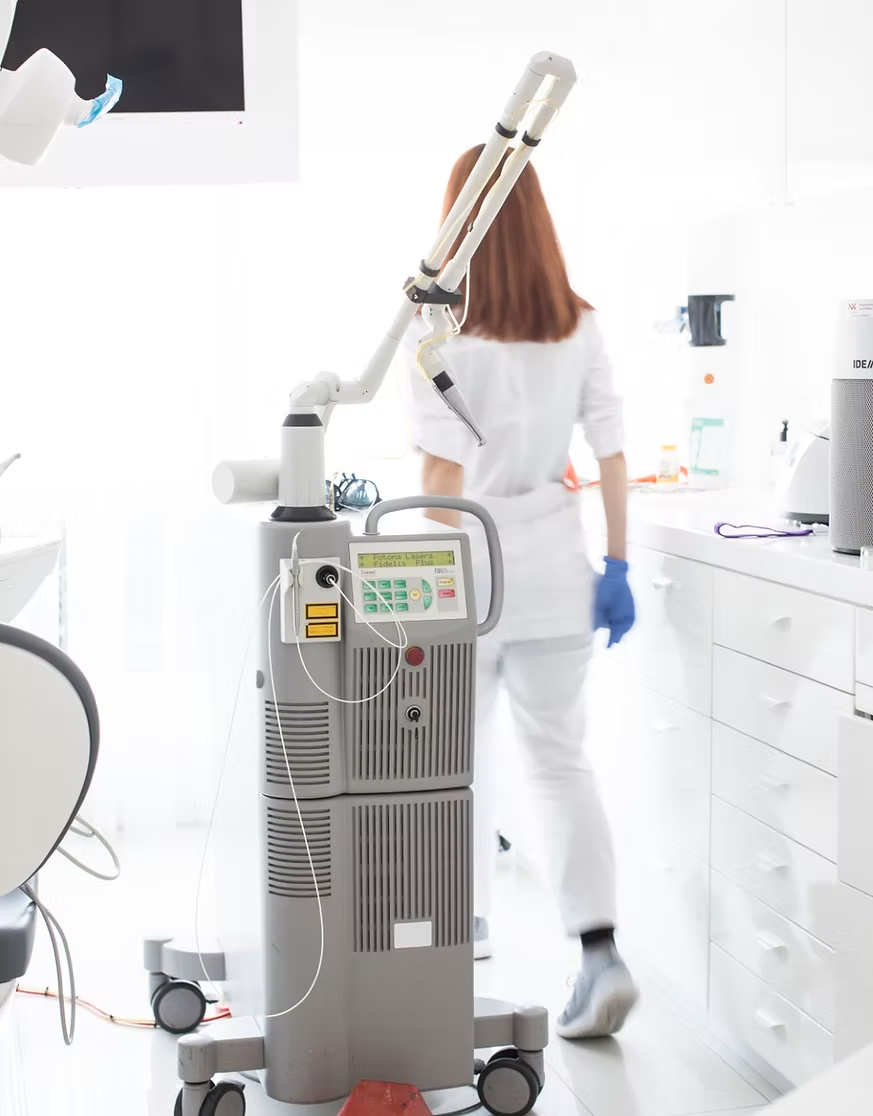
The first dentist in Cyprus certified in the SMART protocol.
Dr. Anna Maria Yiannikos is the first dentist in Cyprus to be certified in the SMART protocol by the International Academy of Oral Medicine and Toxicology — a distinction that speaks not only to qualification, but to clinical direction.
Dr. Anna Maria Yiannikos and Eirini Fragkiadaki have each completed advanced training abroad in oral toxicology and biological dentistry, within their respective clinical roles, under the IAOMT. This is not a one-time achievement. It is a deliberate, recurring commitment.
Continuous education defines the philosophy of Yiannikos Center for Holistic Dentistry. We advance the standards of oral health for each patient we treat, guided by scientific evidence and a conviction we hold deeply — that the mouth is a direct reflection of systemic health.
This is not a new idea. It is, in fact, the oldest principle in medicine: prevention is more powerful than cure.
We do not stand still. We evolve — refining our knowledge, our protocols, and our standards — because the patients who trust us deserve nothing less.
Frequently asked questions
What are biological dental fillings?
Biological dental fillings are restorations selected for optimal biocompatibility and systemic compatibility.
Materials are chosen to minimize adverse reactions while supporting long-term oral and overall health.
How are biological dental fillings different from conventional dental fillings?
The primary difference lies in material selection. Biological dental fillings use BPA- and paraben-free composites or ceramics with superior biocompatibility and safety.
Are biological dental fillings safe?
Yes, they are considered safe. Materials are clinically tested for biocompatibility and present a reduced risk of allergic reactions or toxicity.
Are biological dental fillings as durable as conventional fillings?
Biological dental fillings demonstrate high durability and can perform reliably for many years.
Longevity depends on oral hygiene, occlusal load, and the size and location of the restoration.
Can existing fillings be replaced with biological fillings?
Yes, existing restorations can be replaced with biological materials.
This procedure should be performed under controlled protocols by a clinician trained in safe amalgam removal to minimize exposure risks.
Are biological dental fillings more expensive than conventional options?
Costs vary depending on materials, clinical complexity, and practitioner expertise.
Biological fillings may present a higher initial cost, reflecting material quality and biocompatibility advantages.
Can biological dental fillings be used for all patients?
Yes, most patients are suitable candidates following clinical evaluation.
Final selection should be based on professional assessment and individualized treatment planning.
Do biological dental fillings differ in appearance from conventional fillings?
Biological dental fillings are shade-matched to natural tooth color, ensuring minimal visibility and seamless aesthetic integration.
Do insurance companies cover biological dental fillings?
Coverage varies depending on the insurance provider and specific policy terms.
How can a specialist in biological dental fillings be identified?
Patients may seek clinicians with expertise in biological dentistry or confirm availability within their current practice.
Professional directories, including International Academy of Oral Medicine and Toxicology, provide verified listings of qualified practitioners.