
Passion for perfection

What Is a Dental Implant?
A dental implant is a surgical component placed within the jawbone, designed to replicate the function of a natural tooth root and provide stable, long-term support for prosthetic restorations.
At Yiannikos Centre for Holistic Dentistry, we use zirconia implants as our material of choice — for reasons that are both clinical and biological:
- Zirconia is a metal-free, biocompatible material with no risk of corrosion or ion release
- It offers high structural strength and long-term dimensional stability
- It supports a favourable soft-tissue response and predictable osseointegration
The Implant Treatment Process
The ceramic implant process is carried out in three defined stages: surgical placement of the implant, a structured healing phase, and placement of the final restoration.
Following implant placement, an adequate healing period is observed before the restoration is fitted — allowing for stable osseointegration prior to loading.
At Yiannikos Centre for Holistic Dentistry, we incorporate autologous growth factors (PRF) to support tissue healing and optimise biological integration at the implant site.
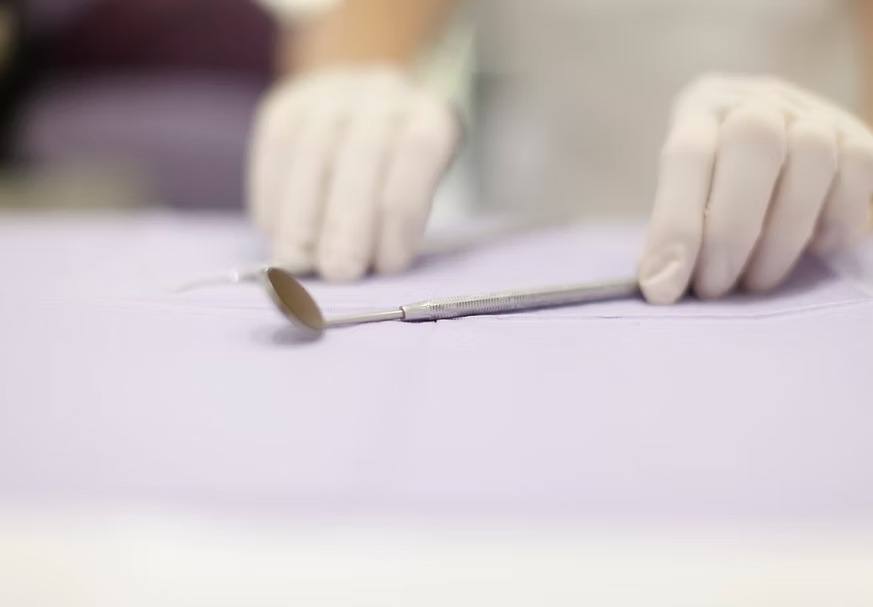
Additional Clinical Advantages of Zirconia Implants.
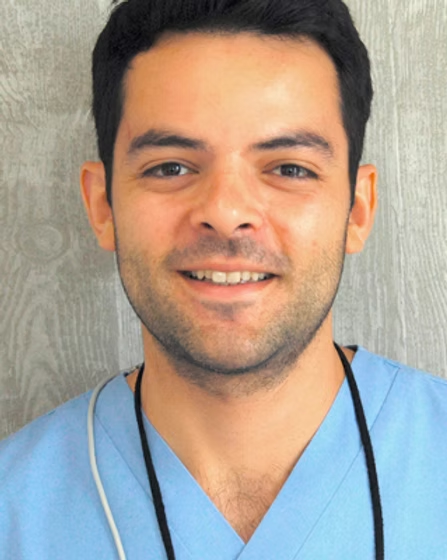
The implantologist of our Center, Dr Christos Constantinides, completed advanced scientific training in implantology at Columbia University. He provides clear, structured explanations for each case — ensuring that you fully understand your treatment options and clinical needs, with safety and long-term health as the guiding principles.
The entire clinical team at Yiannikos Centre for Holistic Dentistry engages in continuous professional training, maintaining consistent standards across all treatments and disciplines.
If you are considering whether a dental implant is the right option for you, our team will provide clear guidance on biocompatible implant solutions and personalised treatment planning.
Material selection is based on biological compatibility — chosen to avoid adverse toxic or immunological responses. We use zirconia implants that combine precision, strength, and reliable clinical outcomes, offering a solution that is both biologically sound and built for long-term health.

Why Choose Yiannikos Centre for Holistic Dentistry
The implantologist at Yiannikos Centre for Holistic Dentistry, Dr. Christos Constantinides, completed advanced scientific training in implantology at Columbia University. He provides clear, structured explanations for each individual case — ensuring you fully understand your specific clinical needs and treatment options, guided at every step by precision and patient safety.
Every member of our clinical team engages in continuous professional training, maintaining consistent standards across all treatments and disciplines — in full alignment with the clinical direction set by Dr. Constantinides.
If you are considering whether a dental implant is the right solution for restoring your function and aesthetics, our team will provide accurate, personalised guidance on biocompatible implant options and treatment planning.
Material selection is based on biological compatibility — chosen to avoid adverse toxic or immunological responses. We use zirconia implants that combine precision, strength, and reliable clinical outcomes, offering a solution that is both biologically sound and built for your long-term health.
Frequently asked questions
What are dental implants?
Dental implants are screws that are surgically placed into the jawbone to replace missing teeth. They are designed to fuse with the bone and provide a strong foundation for artificial teeth.
Who is a good candidate for dental implants?
Most people who are missing one or more teeth are good candidates for dental implants. However, some factors may make you ineligible for implants, such as:
- Severe gum disease
- Not enough bone in the jaw
- Certain medical conditions, such as diabetes or osteoporosis
What are the advantages of dental implants?
Dental implants offer several advantages over other tooth replacement options, such as:
- They are permanent and can last for many years.
- They look and feel like natural teeth.
- They can help to improve your overall oral health.
What are the disadvantages of dental implants?
The main disadvantage of dental implants is the cost. They can be more expensive than other tooth replacement options. However, the cost of implants is often offset by the long-term benefits.
How much do dental implants cost?
The cost of dental implants varies depending on the number of implants needed and the type of implant.
Does insurance cover the cost of dental implants?
Some insurance plans may cover the cost of dental implants, but this varies depending on the plan. It is essential to check with your insurance company to see if they cover implants and how much they will pay.
What is a zirconium dental implant?
Dental implants are a structure made to replicate the functionality of a natural tooth root. They are a surgical component placed into the jawbone to offer substantial support for replacement teeth.
At our practice, we use zirconium implants for several reasons:
- Zirconium is a non-toxic element
- It is a robust and reliable material
- It is a biocompatible element.
We believe inserting a substance into the human body should support overall well-being. Therefore, we use a non-toxic, metal-free material to avoid allergic reactions and provide a safe outcome.
What is the process of a zirconium dental implant?
The ceramic implant process is performed in three steps; surgically inserting the implant, a healing period, and installing the replacement teeth.
The dental implant procedure can take 30 minutes to 4 hours, depending on the patient's required implants.
The process of inserting dental implants requires these steps:
- Removing the damaged tooth unless it is already missing
- Making an incision in the gums
- Screwing the implant into the jawbone
- Waiting for bone growth to unite with the implant and gums to heal (a few months)
- Placing the abutment to each implant which is a top piece that will act as the inside of the artificial tooth
- Applying the replacement teeth
What should you expect after the surgery?
Although the implant surgery sounds invasive and painful, pain is typically minimal. Similarly to any dental surgery, you may experience the common healing discomforts such as swelling, minor bleeding, and soreness at the
implant site.
When the bone fuses appropriately with the ceramic implant, results are successful and effective for replacing a natural functioning tooth.
Practicing excellent oral hygiene and seeing your dentist regularly is essential to keep your gums healthy and your artificial teeth looking their best.
What is the success rate of dental implants?
The success rate of dental implants is very high. Over 90% of implants are successful in the long term.
How should I take care of my dental implants?
Once your dental implants are in place, it is vital to take care of them properly. This includes:
- Brushing and flossing twice a day
- Seeing your dentist for regular checkups
- Avoiding hard foods
What are the risks of dental implants?
The risks of dental implants are relatively low. However, there are some potential risks, such as:
- Infection
- Bone loss
- Rejection of the implant
What happens if I don't replace my missing teeth?
Leaving missing teeth untreated can have several negative consequences, such as:
- Gum disease
- Tooth decay
- Bone loss
- Facial changes